
Cataract Surgery
Clearer vision with treatment planned around your eyes
Cataract surgery removes the cloudy lens and replaces it with a clear artificial lens. The operation is usually performed under local anaesthetic, and most patients return home on the same day.
Ms Neeru Vallabh will perform an assessment of your cataract severity and treatment will be planned around your vision, lifestyle and overall eye health. In addition if you also have glaucoma or raised eye pressure, we can assess whether cataract surgery alone or combined cataract and glaucoma surgery may be appropriate.
What is a cataract?
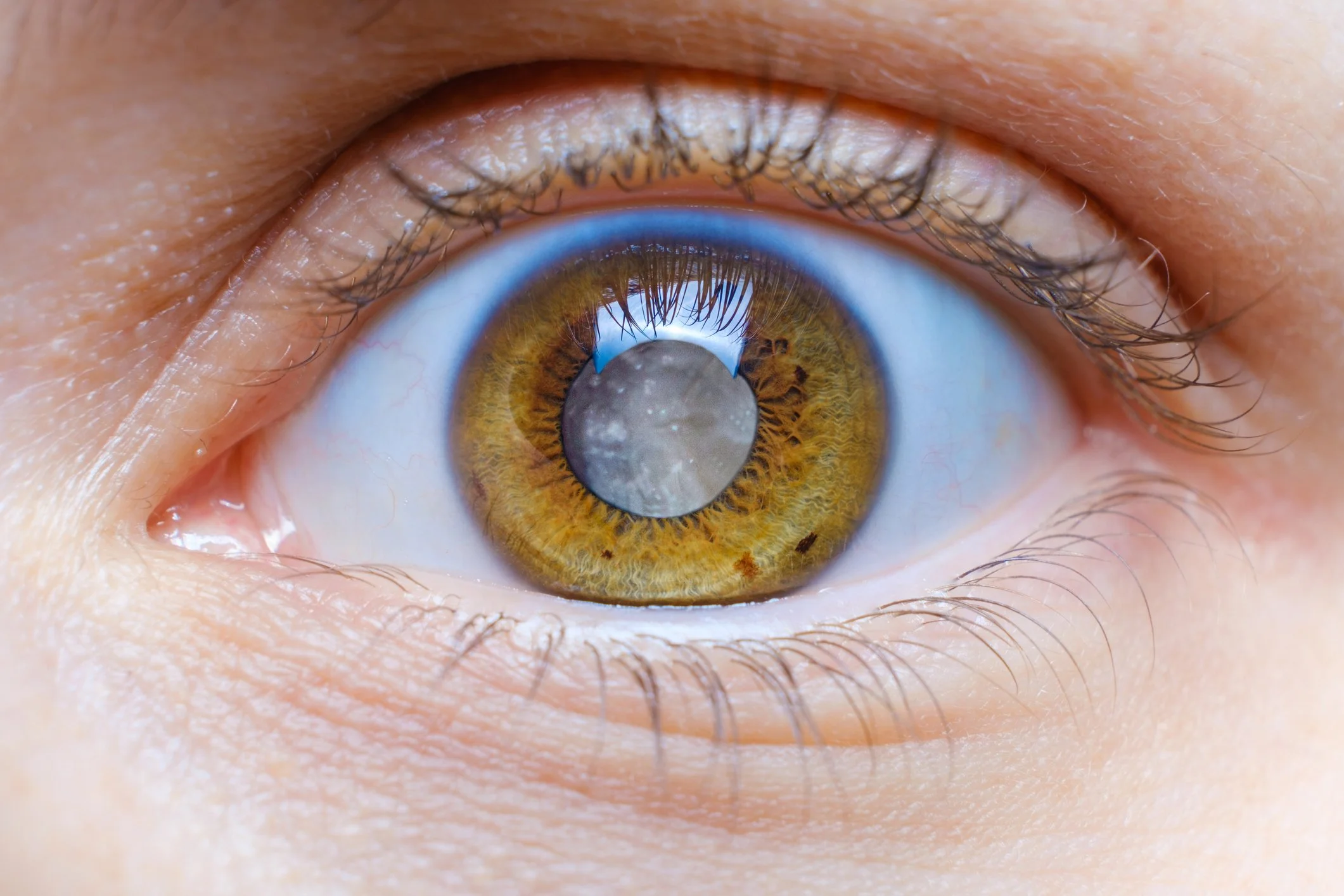
The natural lens of your eye sits behind the coloured part of the eye. It helps to focus light so that you can see clearly.
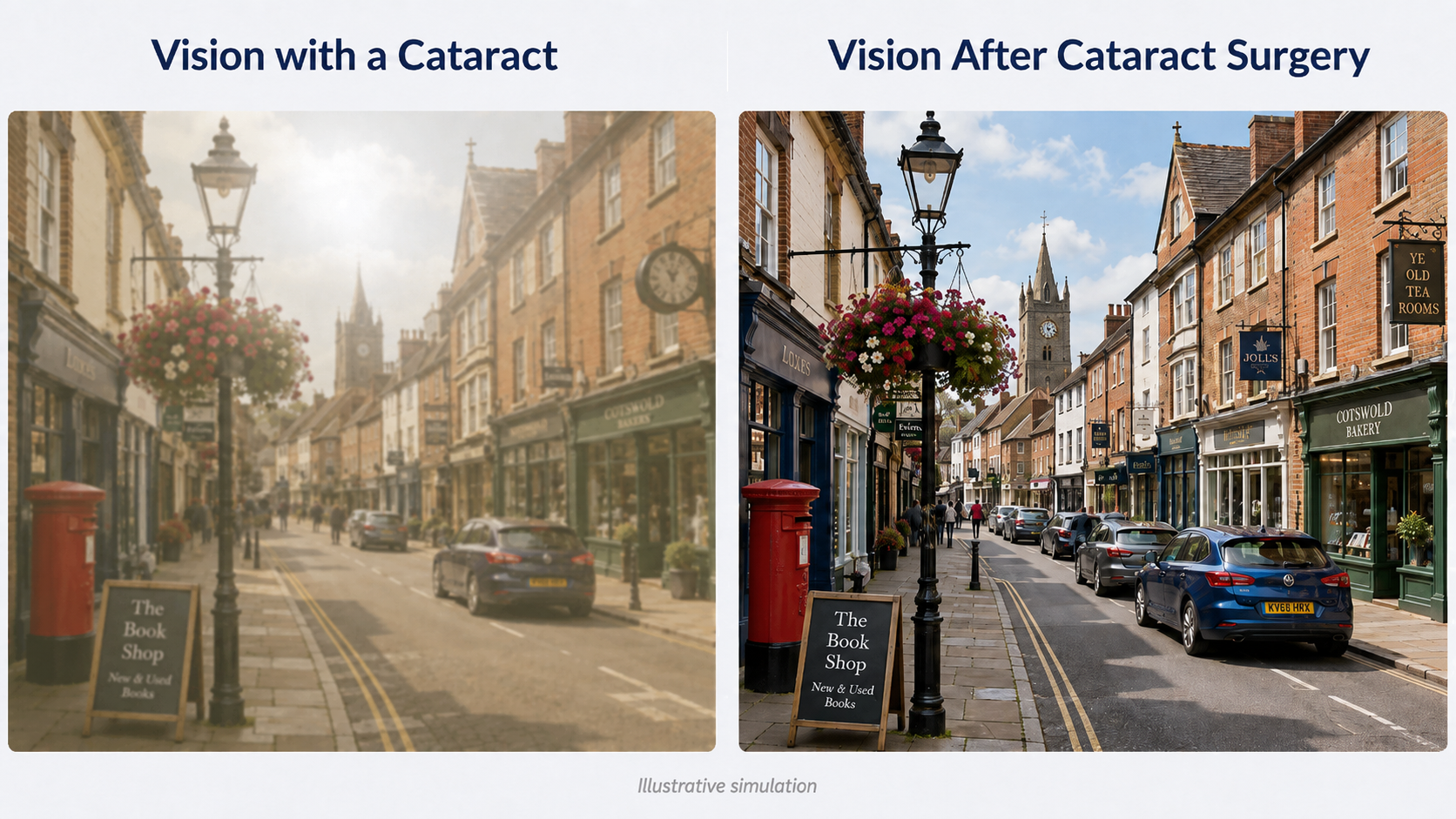
A healthy lens is transparent. As a cataract develops, the lens gradually becomes cloudy—rather like looking through a misted window.
Cataracts often develop as part of the natural ageing process, although they can also be associated with:
diabetes
previous eye surgery or injury
long-term use of steroid medicines
inflammation inside the eye
certain eye conditions
a family history of cataracts
A cataract is not a growth or a film on the surface of your eye.
When should cataract surgery be considered?
Cataract surgery may be recommended when the cataract begins to interfere with your everyday life.
For example, you may be struggling to:
drive safely, particularly at night
read comfortably
use a computer or mobile phone
recognise faces
watch television
work or enjoy hobbies
move around confidently
You do not normally need to wait until a cataract becomes “ripe”. The right time for surgery depends on how your sight is affecting you, your general eye health and whether you feel ready to proceed.
Stronger glasses and brighter lighting may help for a while, but surgery is the only treatment that removes a cataract.
Choosing your replacement lens
During cataract surgery, your cloudy natural lens is replaced with a clear artificial lens, known as an intraocular lens or IOL.
Measurements taken before surgery are used to calculate the lens power most suitable for your eye.
Depending on your eyes, visual needs and examination the options may include:
Monofocal lenses
A monofocal lens is designed to give its clearest focus at one main distance. Many patients choose clearer distance vision and continue to use reading glasses.
Toric lenses
A toric lens may be considered when you have a significant amount of astigmatism. It is designed to reduce blur caused by the shape of the cornea.
Other lens options
Some lenses aim to provide a wider range of focus. These lenses are not suitable for every patient and can sometimes cause glare, halos or reduced contrast.
Patients with glaucoma require particularly careful lens selection. Depending on the type and severity of glaucoma, a standard monofocal lens may provide better quality and contrast than some multifocal lens designs.
No replacement lens can guarantee complete freedom from glasses. Your surgeon will explain the realistic advantages and limitations of each suitable option.
For patients who have both cataract and glaucoma, cataract surgery may sometimes be combined with minimally invasive glaucoma surgery. The advantages, limitations and suitability of each approach are discussed carefully during the consultation.
Ms Vallabh also offers YAG laser capsulotomy for posterior capsule opacification, a common cause of blurred vision that can develop after cataract surgery.
What happens during cataract surgery?
Cataract surgery is usually carried out under local anaesthetic. This means you will be awake, but the eye will be numbed.
During the operation:
Your pupil is widened with eye drops.
The eye and surrounding skin are cleaned.
A small opening is made at the front of the eye.
The cloudy lens is gently broken into small pieces, usually using ultrasound.
The cataract is removed.
The new artificial lens is placed inside the eye.
You may notice bright lights, colours or movement during the procedure, but you should not see the details of the operation.
A cataract-only operation often takes approximately 20 to 45 minutes, although the time varies. Combined cataract and glaucoma surgery may take longer.
Most patients can return home on the same day. You will need someone to accompany you home, and you must not drive yourself.
Recovering after surgery
Your vision may be blurry immediately after the operation because of the dilating drops and the normal healing process. The eye may also feel watery, gritty or mildly uncomfortable.
You will be given eye drops to help the eye heal and reduce inflammation or infection risk. Use them exactly as instructed.
During the early recovery period, you will usually be advised to:
avoid rubbing or pressing on the eye
use an eye shield at night if provided
keep dirty or soapy water out of the eye
avoid eye make-up
avoid heavy lifting and strenuous exercise
avoid swimming
attend all follow-up appointments
continue or change glaucoma drops only as directed
avoid driving until your vision is safe and you have been advised that you may drive
The recovery plan can be different after combined glaucoma surgery. Some patients need more frequent pressure checks, a longer course of drops or additional clinic treatment while the eye heals.
Frequently asked questions
Does cataract surgery hurt?
The eye is numbed with local anaesthetic. You may be aware of light, movement, water or mild pressure, but you should not feel sharp pain. Tell the surgical team immediately if you are uncomfortable.
Will cataract surgery cure my glaucoma?
No. Cataract surgery may help lower eye pressure in some patients, but glaucoma still requires monitoring. Treatment is intended to protect your remaining sight.
Can combined surgery stop my glaucoma drops?
Some patients can use fewer drops after combined surgery, but this cannot be guaranteed. The effect may also change over time. Continue all medication until your ophthalmologist advises otherwise.
Will surgery restore vision already lost through glaucoma?
Unfortunately, damage to the optic nerve cannot currently be reversed. Cataract surgery can improve the blur, glare and loss of clarity caused by the cataract, but it cannot restore sight already lost because of glaucoma.
Will I still need glasses?
You may still need glasses for reading, distance vision or both. This depends on the replacement lens selected, your eye measurements and any other eye conditions.
Can both eyes be treated?
Each eye is assessed individually. Your surgeon will discuss whether the second eye requires surgery and the safest timing for treatment.
How soon can I return to work?
This depends on the type of surgery, how the eye is healing and the work you do. A desk-based role may be possible sooner than work involving heavy lifting, dust, water or physical activity.
Medically reviewed by Ms Neeru A. Vallabh MBBS, FRCOphth, PhD, FEBOS-GL — Consultant Ophthalmologist and Glaucoma Specialist.
Arrange a private cataract assessment
A specialist consultation with Ms Vallabh can establish whether a cataract is responsible for your symptoms and whether surgery is appropriate.
If you also have glaucoma, raised eye pressure, narrow drainage angles or previous glaucoma surgery, your treatment can be planned with both conditions in mind.

Private Insurance Providers




If you require an appointment through an insurance provider, please contact the insurance company in advance to obtain a preauthorisation number.
Please bring the details of your insurance cover to your clinic visit.